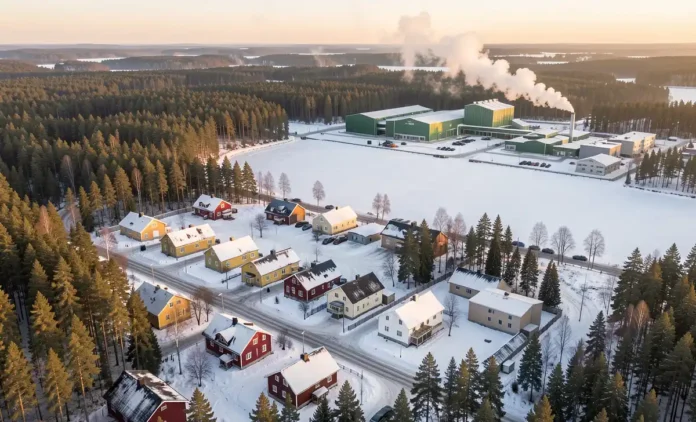
Bodenxt is the strategic platform developed by the Municipality of Boden in northern Sweden to guide the region through a major green transition. It ties together industry growth, housing, skills training, and infrastructure, so everything moves in the same direction at the same time.
What makes Bodenxt different from most sustainability efforts is who it centers. Rather than treating residents as bystanders to big industrial change, the model treats them as core to the solution. The goal is sustainable regional development that serves the people already there, while building something worth staying for the long term.
What Bodenxt Actually Is
Bodenxt is the strategic platform the Municipality of Boden uses to coordinate its green transition. In plain terms, it’s how the town makes sure that when big industrial change arrives, the whole community grows with it, not just around it.
The name says a lot. “Boden” is the town itself; “nxt” points forward. Together, they signal what this platform is about: building the next version of Boden with intention. That means coordinating housing, education, infrastructure, and industry so they reinforce each other instead of competing.
This isn’t a slogan. It’s a working framework that shapes how local leaders plan, invest, and make decisions. When you understand what Bodenxt is trying to do, you start to see how rare this kind of whole-society coordination actually is.
Why Northern Sweden Is Ground Zero for This Change
Northern Sweden has spent the last several years quietly becoming one of Europe’s most important regions for fossil-free industry. Abundant renewable energy, open space, and political will have made it attractive for major green industrial projects.
Boden sits right in the middle of this shift. The town has around 18,000 residents and a long history tied to the military and public sector. Today it’s also home to large-scale green industry investments, including Stegra (formerly H2 Green Steel), one of Europe’s most ambitious green steel projects.
That kind of investment creates real opportunity. It also creates real pressure. Thousands of new workers need housing. Local schools need more capacity. Roads and energy grids need upgrading. Bodenxt exists to manage all of that in a coordinated way, rather than letting it happen piecemeal.
How the Bodenxt Model Works
The Bodenxt approach organizes around four clear areas, each tied to what people actually need when a region grows fast.
- Living and housing: Planning enough homes at the right price before demand outpaces supply.
- Infrastructure: Upgrading energy grids, roads, and broadband so growth has a solid base to stand on.
- Skills and people: Building training programs and education partnerships so local residents fill skilled roles, not just service jobs.
- Business and innovation: Supporting existing companies while attracting new ones in green sectors.
In practice, the process starts with mapping what the region already has. What skills do people here bring? What local businesses could grow alongside the new industry? What’s missing? From there, planning runs in parallel across all four areas rather than handling one thing at a time.
This is what separates Bodenxt from a traditional development plan. Most plans tackle infrastructure first, then housing, then community. Bodenxt tries to run them together so nothing falls behind.
Sustainable Regional Development in Practice
Let’s look at what community-led transformation actually looks like when this model is working. A green steel plant comes online. Under a standard approach, the town might react: build some apartments, post job listings, upgrade the main road. Bodenxt’s approach is proactive. Before the plant opens, housing developments are already planned, local trade schools are already building new programs, and a business support office is already helping regional suppliers position themselves as vendors.
The difference sounds small, but it’s significant. In the reactive model, local people often get left behind while newcomers fill the jobs. In the proactive model, the people already there get the first shot at the new opportunities.
In my experience, following these kinds of regional shifts, the ones that create lasting change tend to be the ones that invest in existing communities rather than build around them. When a town trains its own welders and engineers for a new green steel plant, those workers stay. When workers are imported wholesale from elsewhere, the connection between industry and community stays thin.
That’s the core of what sustainable regional development means here. It’s not just green energy or cleaner production. It’s making sure the gains stay local.
The Real Challenges Worth Talking About
It’s fair to ask whether this approach holds up under pressure. A few honest criticisms are worth taking seriously.
First, this model is slower. Getting housing, infrastructure, education, and industry to move together requires coordination across many organizations with different priorities and timelines. Bureaucracy is real. Delays happen.
Second, rapid growth can change the feel of a small town quickly. Some residents in Boden have raised concerns about rising housing costs and a shift in community culture as the region attracts workers from outside. These concerns aren’t unfounded. Population growth at this speed is genuinely hard to absorb.
Third, this kind of long-term planning depends on sustained funding and political commitment. A change in local government, a shift in national policy, or a project delay can throw the whole timeline off. Unlike a single infrastructure project with a clear start and end, Bodenxt is a continuous process. That’s a strength in theory but a vulnerability in practice.
Bodenxt’s response to these challenges is to keep community and livability at the center of all decisions. Whether that holds over a 10 or 20-year horizon remains to be seen. But the intent is clearly there.
Local Economic Resilience Over the Long Term
Over the next 3 to 5 years, the effects of this model should become visible in everyday life. More stable jobs in green sectors could slow the out-migration that has affected northern Swedish communities for decades. Young people who once left for Stockholm or Gothenburg may find reasons to stay, or come back.
A more diverse economy also means less dependence on any single employer or industry. That kind of local economic resilience is one of the clearest long-term wins the Bodenxt platform is designed to produce.
The towns and regions that handle industrial transitions well tend to be the ones that treat the people already there as the starting point. Bodenxt is betting on that approach at scale. If it works, it gives other regions a clear and credible example to follow.
FAQs
What exactly is Bodenxt?
Bodenxt is the strategic platform the Municipality of Boden uses to manage its green transition. It coordinates industry growth, housing, skills training, and infrastructure so they develop together rather than at different speeds.
Why is it called “Bodenxt”?
The name combines “Boden,” the town’s name, with “nxt,” meaning next. It signals the town’s intent to plan and build a forward-looking, sustainable version of itself.
Is this just about one big factory?
No. Projects like Stegra are major catalysts, but Bodenxt covers the full picture of how a region grows. That includes neighborhoods, schools, local businesses, and community services.
How does Bodenxt differ from other green initiatives?
Most green initiatives focus on a single sector or project. Bodenxt coordinates across housing, education, business, and infrastructure at the same time. The goal is for every part of the region to grow together, not just one piece of it.
Does this approach actually work? Are there real-world examples?
Boden is one of the most closely watched examples of whole-society coordination in Europe right now. Results will take years to fully measure, but early indicators, including job growth, investment levels, and population trends, are being tracked by researchers and regional planners across the continent.
Who is behind the Bodenxt vision?
The Municipality of Boden leads the Bodenxt platform. Local government officials, regional businesses, educational institutions, and community stakeholders all play roles in shaping and carrying out its plans.