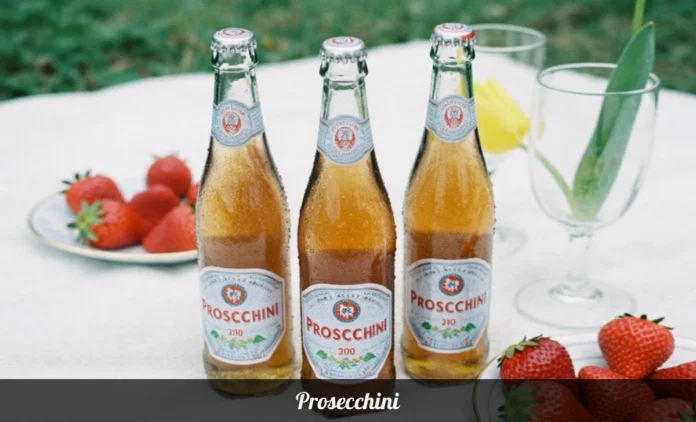
Prosecchini are single-serve Prosecco bottles, typically 187-200ml, made from Glera grapes using traditional methods. These mini bottles offer authentic Italian sparkling wine in a portable format, perfect for events, solo enjoyment, or tastings without waste.
Picture this: you’re at a wedding reception, and instead of waiting for someone to pour from a communal bottle, you reach for your own perfectly chilled mini Prosecco. No waste, no flat leftovers, just fresh bubbles from start to finish. That’s the Prosecchini experience, and it’s changing how people enjoy Italian sparkling wine.
What Prosecchini Actually Means
Prosecchini combines “prosecco” with the Italian diminutive suffix “-ini,” which translates to “little” or “small.” The result is straightforward: little Prosecco bottles designed for single servings.
These aren’t just any small bottles. Authentic Prosecchini contain the same Prosecco DOC wine you’d find in standard 750ml bottles. The wine comes from Italy’s Veneto and Friuli Venezia Giulia regions, made with Glera grapes and produced using the Charmat method that gives Prosecco its signature fresh, fruity character.
Most Prosecchini bottles hold between 187ml and 200ml. That’s roughly one and a half glasses of wine, making them ideal for solo enjoyment or sharing between two people. The format has become particularly popular in North America, the UK, and Australia, where Prosecco consumption has grown steadily over the past decade.
You might see conflicting information online about Prosecchini referring to zucchini dishes or fruit cocktails. While creative interpretations exist, the wine industry recognizes Prosecchini specifically as these mini Prosecco bottles.
Why Prosecchini Became Popular
The single-serve wine market has been growing at approximately 8% annually since 2023, according to beverage industry reports. Prosecchini rides this wave for several practical reasons.
First, there’s the waste factor. Opening a full bottle means you need to finish it within a day or two before it goes flat. With Prosecchini, you get fresh carbonation every time you open a new bottle. No pressure to finish more than you want.
Event planners discovered Prosecchini early. Wedding coordinators use them as favors, table settings, or alternatives to champagne toasts. Corporate events distribute them at conferences and networking functions. The individual packaging eliminates serving logistics while adding a touch of elegance.
The photogenic quality matters too. Social media users love the aesthetic of these compact bottles. They photograph well at picnics, beach outings, and brunch tables. Brands like Bottega Gold created distinctive golden bottles that became instantly recognizable on Instagram.
The low-ABV movement also boosted Prosecchini’s appeal. At 11-12% alcohol by volume, a single bottle contains less alcohol than many cocktails. This fits with consumer trends toward moderation and mindful drinking, especially among millennials and Gen Z drinkers.
How Prosecchini Are Made
Production follows the same process used for full-sized Prosecco bottles. Winemakers harvest Glera grapes in the Veneto region, particularly around Treviso, Valdobbiadene, and Conegliano. Some premium producers source from Asolo, known for mineral-rich soils.
The Charmat method defines Prosecco production. Unlike Champagne, which ferments in individual bottles, Prosecco undergoes secondary fermentation in large pressurized steel tanks. This preserves the wine’s fresh fruit flavors and floral aromatics while creating those signature bubbles.
After fermentation, the wine is cooled, filtered, and bottled under pressure to maintain carbonation. The entire process from grape to bottle takes about three months, much faster than traditional champagne production. This efficiency keeps costs reasonable while delivering consistent quality.
The DOC (Denominazione di Origine Controllata) designation guarantees the wine meets specific production standards. DOCG (the G stands for Garantita) indicates even stricter quality controls, typically applied to Prosecco from Conegliano Valdobbiadene and Asolo regions. Look for these labels when shopping for Prosecchini to ensure authenticity.
Sweetness Levels You Should Know
Prosecco comes in several sweetness categories, and Prosecchini follow the same classification system. Understanding these helps you choose bottles that match your taste preferences.
Brut contains less than 12 grams of residual sugar per liter. This is the driest style, offering crisp acidity with minimal sweetness. It pairs well with seafood, raw oysters, and salty snacks. The clean finish makes it a favorite among dry wine enthusiasts.
Extra Dry, despite the name, tastes slightly sweeter than Brut. It contains 12-17 grams of residual sugar per liter. This is actually the most popular style in Italy, where locals prefer a touch of sweetness to balance the wine’s natural acidity. Extra Dry works well as an aperitif and pairs with light appetizers.
Dry (sometimes labeled Sec) is noticeably sweet, with 17-32 grams of residual sugar per liter. This style suits desserts, spicy Asian dishes, or anyone who prefers sweeter sparkling wines. The confusing nomenclature trips up many buyers, so remember: Dry is actually the sweetest common category.
Most Prosecchini you’ll find in stores fall into the Extra Dry category. Premium brands often offer Brut options for those seeking a drier profile.
Best Ways to Serve Prosecchini
Temperature matters more than you might think. Serve Prosecchini between 45-50°F (7-10°C) for optimal flavor and carbonation. Too cold and you’ll mute the fruit flavors. Too warm, and the bubbles dissipate quickly.
Chill bottles in your refrigerator for at least two hours before serving. Avoid the freezer unless you’re in a rush, and even then, don’t leave bottles longer than 20 minutes. Ice buckets work well for outdoor events.
Glassware choice affects the experience. Traditional flutes work fine and help preserve carbonation. Tulip glasses offer a wider bowl that releases aromatic compounds, giving you more of the wine’s floral and fruity notes. Some people drink straight from the bottle at casual gatherings, which is perfectly acceptable.
Once opened, drink Prosecchini promptly. The small volume means carbonation fades faster than in larger bottles. These aren’t designed for recorking and saving.
Prosecchini shines at specific occasions. Brunches, picnics, and outdoor concerts are natural fits. They travel well in coolers. Wedding planners use them for cocktail hours, rehearsal dinners, and morning-of celebrations. Some hosts create DIY tasting stations where guests sample different brands or sweetness levels.
Food Pairings That Work
The acidity and light body of Prosecchini make them versatile food partners. The bubbles cleanse your palate between bites, refreshing your taste buds.
Seafood creates natural harmony. Oysters, shrimp cocktail, ceviche, and grilled fish all benefit from Prosecchini’s crisp character. The wine doesn’t overpower delicate flavors. Brut styles work best here, as the dryness complements brininess.
Light appetizers form another strong pairing category. Bruschetta with fresh tomatoes, prosciutto-wrapped melon, caprese skewers, and mild cheeses all work well. Extra Dry Prosecchini matches the slight sweetness in cured meats and fresh fruit.
Asian cuisine might surprise you. Sushi, Thai curries, Vietnamese pho, and Chinese dim sum pair beautifully with Prosecchini. The slight sweetness in Extra Dry styles balances spicy heat, while carbonation cuts through rich sauces.
Desserts benefit from sweeter Prosecchini. Fruit tarts, shortbread cookies, panna cotta, and light cakes match well with Dry styles. Avoid pairing dry Prosecchini with sweet desserts, as the wine will taste sour by comparison.
Skip heavy tomato sauces, overly rich cream dishes, and strongly flavored meats. These overpower Prosecchini’s delicate profile.
Where to Buy and What to Look For
Quality markers tell you what you’re getting. Always check for the Prosecco DOC label on the bottle or packaging. This guarantees the wine meets Italian production standards. DOCG labels indicate premium quality from specific subregions.
Trusted brands include La Marca, Mionetto, Zonin, Bottega Gold, and Signorina. These producers have established reputations for consistency. Bottega Gold stands out for its distinctive metallic bottles, while Signorina focuses exclusively on mini formats.
Prices typically range from $4 to 10 per mini bottle, depending on brand and quality level. Compare this to $12-20 for standard 750ml bottles, and you’ll notice the per-milliliter cost runs higher. You’re paying for packaging, convenience, and portion control.
Local wine shops and liquor stores stock Prosecchini in their sparkling wine sections. Total Wine, BevMo, and specialty Italian markets often carry multiple brands. Major retailers like Whole Foods and Trader Joe’s have added mini formats to their wine selections.
Online options include wine.com, Drizly, and direct-from-winery purchases. Many brands sell cases of 24 mini bottles with customization options for events. Amazon carries some brands, though the selection varies by state shipping laws.
When shopping, examine labels for harvest dates if visible. Prosecco tastes best within 18 months of production. Check for DOC certification, sweetness level designation, and alcohol content (should be 10.5-12% ABV).
The Sustainability Question
Single-serve packaging raises environmental concerns. Glass production requires significant energy, and smaller bottles mean more packaging material per liter of wine compared to standard bottles.
However, the sustainability picture isn’t entirely negative. Glass is infinitely recyclable when properly processed. Many municipalities accept these bottles in regular recycling programs. The key is ensuring they reach recycling facilities rather than landfills.
Some producers are responding with eco-conscious initiatives. Lighter-weight glass reduces transportation emissions. Companies like Signorina highlight sustainable farming practices in their vineyards, including organic certification and water conservation methods.
The waste reduction benefit matters too. Full bottles that go flat before finishing create their own waste problem. Prosecchini eliminates this issue, potentially reducing overall wine waste at events and gatherings.
Transportation efficiency varies. Shipping cases of mini bottles versus standard bottles involves trade-offs. More packaging materials per liter, but better utilization of individual servings without waste.
As a consumer, you can support sustainability by choosing producers who publicize eco-friendly practices, recycling empty bottles properly, and buying in bulk (cases of 24) rather than single bottles to reduce packaging waste.
Prosecchini vs Regular Prosecco
Understanding the practical differences helps you decide when each format makes sense.
| Factor | Prosecchini (200ml) | Regular Prosecco (750ml) |
|---|---|---|
| Volume | 1.5 glasses | 5-6 glasses |
| Cost per ml | $0.02-0.05/ml | $0.016-0.027/ml |
| Best for | Solo drinking, events, gifts | Home dinner parties, groups |
| Carbonation | Fresh every bottle | Fades after opening |
| Portability | Excellent | Limited |
| Waste | None | Potential if not finished |
| Storage | Minimal space | Requires more room |
Regular bottles win on value. You get more wine per dollar spent. But that value disappears if you can’t finish the bottle before it goes flat.
Prosecchini excel at specific use cases. Event planners save money on serving logistics and waste. Solo drinkers enjoy fresh bubbles without commitment. Travelers pack them easily for picnics and outdoor adventures.
Carbonation quality favors Prosecchini in one respect. Each bottle gives you perfect fizz from first pour to last. With regular bottles, the carbonation quality declines after opening, even with proper storage.
The format also enables variety. You can try different brands, sweetness levels, or even mix with friends without committing to full bottles of each.
For regular home consumption with groups, standard bottles make more economic sense. For events, gifts, travel, or solo enjoyment, Prosecchini delivers better value despite higher per-milliliter costs.
Making Your Choice
Prosecchini represents more than a marketing gimmick. They solve real problems around wine waste, event logistics, and portion control while delivering authentic Italian Prosecco in an accessible format.
The format works best when convenience, freshness, and individual servings matter more than pure cost efficiency. Wedding toasts, corporate events, picnics, and casual solo enjoyment all benefit from this approach.
Quality varies by producer, so stick with DOC-certified brands and check sweetness levels to match your preferences. Brut for dry wine lovers, Extra Dry for balanced sweetness, and Dry for those who prefer sweeter sparklers.
Storage is simple. Keep bottles upright in a cool, dark place. Chill before serving. Drink soon after opening for the best carbonation.
The mini bottle trend shows no signs of slowing. As consumers prioritize convenience, moderation, and experiential drinking over pure volume, Prosecchini fit perfectly into modern lifestyles. Whether you’re celebrating a small victory, enjoying a quiet evening, or planning a large event, these little bottles deliver big on Italian sparkle.